Storing and Handling Custom Ice Cream Cups: Back-of-House Care From Delivery to Dipping Cabinet
Custom ice cream cups stay looking their best when they are kept dry, clean, uncrushed and away from heat until the moment they are filled. Customized Ice Cream Cups prints cups for scoop shops, gelato counters and caterers, and most problems with printed cups happen after delivery, in the stockroom and at the counter. This guide covers simple handling habits that protect every sleeve.
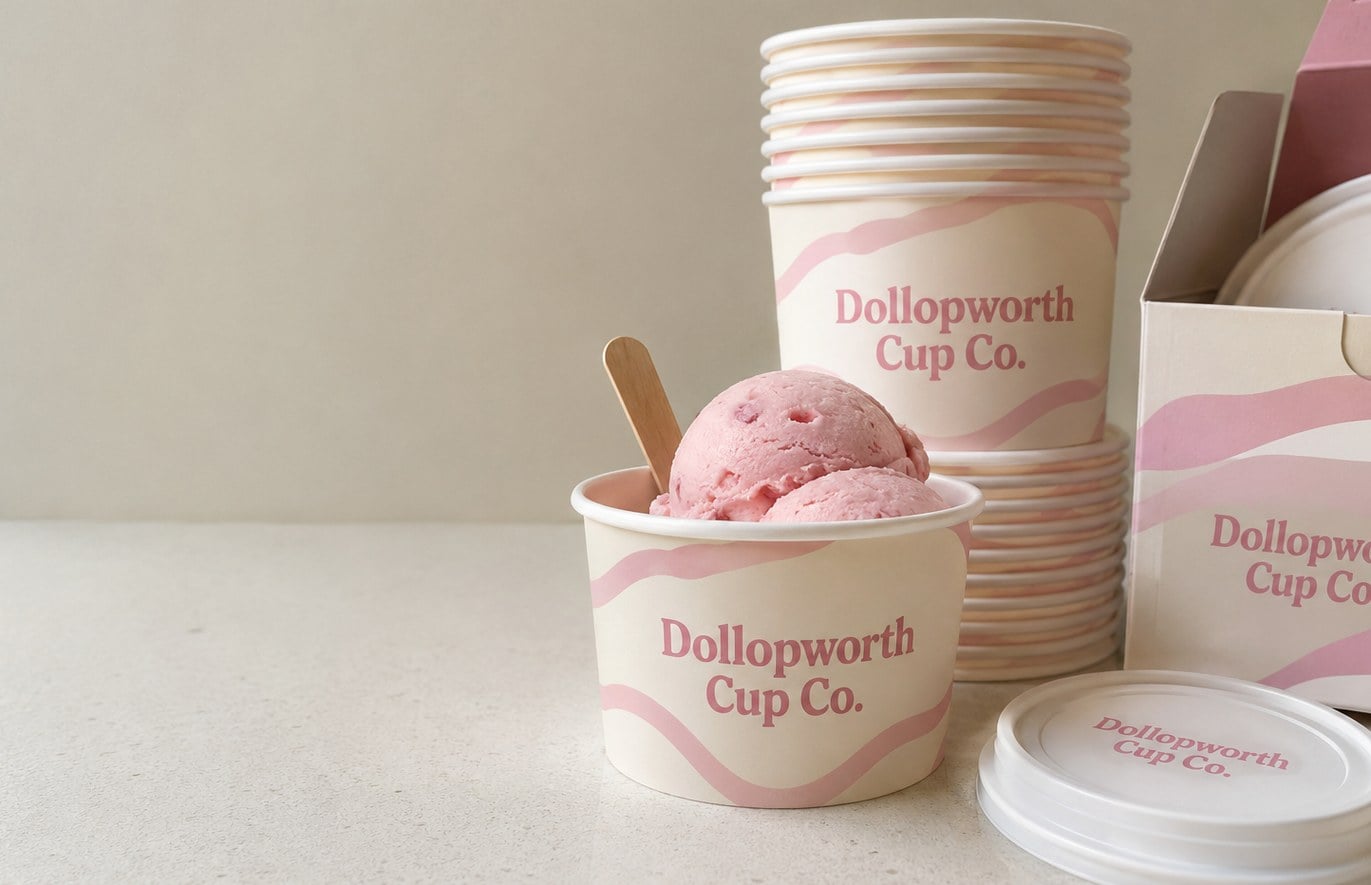
- Printed ice cream cups last longest stored sealed, dry and off the floor until they are needed.
- Cups, lids and spoons are easiest to manage when each size is stored as a matched set.
- Rotate stock so older printed cups are used first, especially after a design change.
- Customized Ice Cream Cups keeps your approved artwork, so reorders match the first run.
How should I store custom ice cream cups when the delivery arrives?
Store custom ice cream cups in their original cases, sealed, in a clean, dry room away from heat sources and off the floor. The shipping case is the best protection printed cups will ever have: it keeps sleeves aligned, blocks dust and stops the stacks from being squeezed out of shape.
When the delivery arrives, check the cases for crushed corners or damp spots, then move them to dry storage quickly. A loading dock on a hot afternoon or a corner next to the dish machine is the wrong place to leave paper cups, even for an hour.
A good storage spot for printed ice cream cups has these qualities:
- Dry air, away from steam, mop buckets and ice machines.
- Shelving or pallets that keep cases off the floor.
- Room temperature or cooler, away from ovens, compressors and sunny windows.
- Cases stacked squarely, with heavy items never placed on top.
Write the delivery date on each case. That small habit makes rotation easy later.
Do printed ice cream cups need to be kept in the freezer before use?
No, printed ice cream cups do not need to be kept in the freezer before use, and storing whole cases in a walk-in freezer usually causes more trouble than it solves. Cups moved from a freezer into warm, humid air collect condensation, and damp paper sleeves can stick together or soften at the rim.
Many scoop shops do pre-chill a small working stack so the first scoop does not start melting against a warm cup. That is fine for the cups you plan to use within a shift. The rest of the inventory should stay in dry storage.
A practical approach many counters use:
- Keep full cases sealed in dry storage at room temperature.
- Move one sleeve per size to the service area at the start of a shift.
- If you pre-chill, keep that small stack in a dry, covered spot rather than an open freezer shelf.
- Return unopened sleeves to dry storage at closing.
Take-home pints and quarts that are filled and frozen for retail are different: those are designed to be frozen once they hold product.
How do I keep cups, lids and spoons organized in a busy stockroom?
Keep cups, lids and spoons organized by storing each cup size beside its matching lid and spoon, labeled as one set. A busy stockroom with cups on one shelf and lids on another is how staff end up grabbing a dome lid for a small cup or running out of spoons in the middle of a rush.
Customized Ice Cream Cups offers lids, spoons and accessories designed to work with its cups, and they are easiest to manage as matched pairs:
| Item | Storage tip | Why it matters |
|---|---|---|
| Scoop cups | Group by size, smallest on the top shelf | Fast to grab, easy to count |
| Lids | Shelve directly beside the matching cup size | Prevents wrong-size lids at the counter |
| Spoons | Keep in a closed box or bin | Stays clean and dust-free |
| Take-home pints | Store separately from scoop cups | Different reorder rhythm |
Label each shelf with the size and design name. When a seasonal design and a year-round design share the same size, the label stops staff from mixing them.
What damages printed ice cream cups before they reach the customer?
Moisture, crushing, heat and handling at the rim are the four things that damage printed ice cream cups before they ever reach a customer. Each one is easy to prevent with a small change in routine.
- Moisture. Wet hands, a damp counter or a cup dispenser next to the dipping well can leave spots on the outside of a paper cup. Keep the working stack on a dry surface.
- Crushing. Overstuffing a dispenser or stacking boxes on top of open sleeves bends rims, and a bent rim does not hold a lid well.
- Heat. A sunny window, a hot truck interior or the top of a compressor can soften cups and make sleeves stick together.
- Rim handling. Staff should pull cups from the base or side, not by the rim, which is the part customers touch with their mouths.
Mobile vendors face all four at once. An ice cream truck or cart benefits from keeping cups in a closed bin away from the freezer lid, where condensation forms most.
How long can custom ice cream cups sit in storage before they should be used?
Custom ice cream cups that are kept sealed, dry and uncrushed can sit in storage for a long time, so the real limit is usually your design, not the cup. A cup printed with a dated event, a limited flavor or an old logo becomes unusable the day that design changes, even if the cup itself is perfect.
Plan storage around how quickly each design moves:
- Year-round designs can be stored for longer and reordered on a steady rhythm.
- Seasonal designs should be counted at the end of each season so the next order is sized correctly.
- Dated or event designs should be ordered close to the quantity you expect to use.
Use the oldest cases first. When you reorder from Customized Ice Cream Cups, the approved artwork stays on file, so a new run matches the cups already on your shelf and the two batches can be used side by side.
How should a caterer pack custom ice cream cups for an off-site event?
A caterer should pack custom ice cream cups in a sealed, rigid container, separate from the ice cream and ice, with lids and spoons packed beside each cup size. The goal is to arrive at the venue with cups as clean and dry as when they left the stockroom.
- Count cups per size for the event, plus a few spares for spills and seconds.
- Pack sleeves upright in a clean bin with a lid, not loose in a bag.
- Keep the cup bin away from coolers and dry ice during transport.
- Set up a dry serving station at the venue with the working stack under cover.
- Bring unused sleeves back sealed so they can return to inventory.
Event cups printed for a wedding or a fundraiser deserve extra care, because guests often photograph them. A crushed rim or water spot shows up clearly in a photo. The sundae and dessert cups page shows styles that suit dessert tables and catering lines.
When is it time to reorder custom ice cream cups instead of stretching old stock?
It is time to reorder custom ice cream cups when your stock of the busiest size drops to what you would use before a new order can arrive. Standard turnaround from Customized Ice Cream Cups is about 2 weeks after you approve the design, with faster turnaround available with express shipping, so the reorder point should cover at least that window.
Do not stretch damaged stock to fill the gap. Cups with bent rims, water spots or faded print from poor storage send the wrong message about the ice cream inside. Set those aside, count what is usable and reorder from that number.
When you reorder, send your size counts, the design name and any changes through the quote form. You receive a free mockup within 24 hours if anything changes, and you pay nothing until you approve. See how it works for the full process, and the flat lid vs dome lid guide if you are rethinking lids on the same order.
Frequently asked questions
Can custom ice cream cups be stored in a garage or basement?
Custom ice cream cups can be stored in a garage or basement only if the space stays dry, clean and away from extreme heat. Damp basements and hot garages can soften paper cups and leave marks on the print. Keep cases sealed on shelves off the floor, and move them somewhere drier if you notice moisture or musty air.
Should ice cream cups be stored rim up or rim down?
Ice cream cups are best kept in their sleeves inside the original case, in whatever direction the case was packed. Once a sleeve is opened at the counter, a covered dispenser or rim-down stack on a clean, dry surface keeps dust out of the cups. Customized Ice Cream Cups recommends never leaving open sleeves exposed near the dipping well.
How can staff tell a seasonal cup design from the everyday design in storage?
Seasonal ice cream cups are easiest to tell apart when each case and shelf is labeled with the design name as well as the size. Write the name on the outside of every case at delivery. Customized Ice Cream Cups can also print a small design detail that differs between versions, so staff spot the difference quickly during a rush.
What should I do with printed cups that got wet in storage?
Printed ice cream cups that got wet in storage should be checked sleeve by sleeve. Cups with soft rims, stuck sleeves or marked print should not be used for customers. Dry, undamaged sleeves from the same case can usually be kept. Fix the cause, such as a leak or ice machine nearby, before the next delivery from Customized Ice Cream Cups arrives.
Do take-home pints need different storage from scoop cups?
Take-home pints are stored empty the same way as scoop cups: sealed, dry and off the floor. Once filled with ice cream for retail, pints go into the freezer as finished product. Customized Ice Cream Cups suggests keeping empty pints on their own shelf, since they usually follow a different reorder rhythm from daily scoop cups.
How many sleeves of ice cream cups should be at the counter during a shift?
Ice cream cups at the counter should be limited to roughly what the shift will use, with more sleeves kept in dry storage nearby. Fewer open cups means less exposure to drips, steam and handling. Customized Ice Cream Cups customers often keep one open sleeve per size and restock from the stockroom as each one runs low.
Can I keep leftover event ice cream cups for a future event?
Leftover event ice cream cups can be kept for a future event if the design has no date or one-time detail on it. Seal the remaining sleeves, label the case and store it dry. Customized Ice Cream Cups can design undated event cups from the start, which makes leftovers useful instead of wasted after the day ends.
How should an ice cream truck store cups during a hot day on the route?
Ice cream cups on a truck should ride in a closed bin in the coolest dry spot, away from the freezer lid and the serving window sun. Keep only one sleeve per size open at the window. Customized Ice Cream Cups customers on mobile routes often restock the window from the bin between stops rather than leaving cups exposed.
Why do sleeves of paper ice cream cups sometimes stick together?
Paper ice cream cups stick together in a sleeve when they are exposed to moisture, heat or heavy pressure for too long. Humid stockrooms, cases stored near compressors and boxes stacked on open sleeves are the usual causes. Store cases sealed, dry and squarely stacked, and the cups from Customized Ice Cream Cups separate cleanly at the counter.
Is it worth counting ice cream cup stock every week?
Counting ice cream cup stock every week is worth it for any shop that serves daily, because the busiest size can run out faster than expected. A quick shelf count shows when to reorder before the standard 2-week turnaround becomes a problem. Customized Ice Cream Cups keeps your artwork on file, so reorders from those counts stay simple.
Should lids be stored in their own sealed box after the case is opened?
Lids for ice cream cups stay cleanest when kept in a closed box or covered bin after the case is opened, right beside the matching cup size. Loose lids on an open shelf collect dust and get bent. Customized Ice Cream Cups recommends labeling each lid bin with its cup size so staff always grab the right fit.
Get a free mockup for your ice cream cups
Send your logo or idea and the quantity you have in mind. Customized Ice Cream Cups returns a free mockup within 24 hours, you approve the design before anything is produced, and standard turnaround is about two weeks with faster options available. Get a custom quote.